

Custom software development for processes that need automation
Bespoke software development for the part of the business your off the shelf tools do not cover. Platforms, applications and workflow systems built around the way you already work, with AI only where it creates measurable value.
We work with clients and partners across the globe.



The problem
Off the shelf software covers most of it, your team has to cover the rest
Every business runs on a few products that do most of the job. The rest is a spreadsheet beside the CRM, a renewal date someone remembers, a sign off that lives in an inbox, a report that takes a day to reconcile. That gap is filled by people, every week, and it is where the errors live.
Custom software is built for that gap. It does not replace the systems you already run. It sits alongside them, carries the process between them without a manual hand off at each step, and takes the re-keying away from the people doing it.
What we build
Bespoke software development for the way your business operates
Four kinds of build. Each runs the same way every time, so custom software does the job.
-
Internal business platforms
Talk to an expertSystems built around one organisation’s way of working, where the off the shelf equivalent would make the business change to suit it. A compliance LMS and custom CRM for Donut, a care home platform for a UK care provider.
-
Cross platform applications
Talk to an expertApplications that run on whatever device the work happens on, with one set of data behind them, as built for Milkrite InterPuls.
-
Workflow and process automation
Talk to an expertRules and logic that carry a process between systems and people without a manual hand off at each step: a tender workflow that drafts bid responses from a contractor’s past bids is one.
-
Monitoring and alerting
Talk to an expertThresholds set on live operational data, with alerts sent to whoever has to act on them. Equipment lifecycle alerts for Milkrite InterPuls, real time and emergency alerts for a care provider.
The process
How the custom software development process works
Six stages, from mapping the process to supporting it after going live. The old route stays open until the new one has proved itself.
-
Discovery and scoping
We map how the process actually runs today, and UX research with the people who touch it shows where it stalls. You get a written scope, a cost estimate and a timeline before anything is built.
-
Design
The data model, the screens and the integration points, agreed on paper. What each system of record keeps, and what the new build owns, is settled here.
-
Build in short cycles
Working software every couple of weeks, on your data, reviewed by the people who will use it. Nothing waits for a big reveal.
-
Integration
The build is connected to the systems around it through our own integration platform rather than a third party’s.
-
Going live alongside the old process
It runs next to the existing route before it replaces any of it, so errors surface while the fallback is still there.
-
Support
We stay in touch, and agree any changes or improvements with you.
Why Elev8
Why businesses bring bespoke software projects to Elev8
There are plenty of custom software development companies. These are the reasons the awkward projects come here.
-
You are told when AI is the wrong answer
By a company that sells AI. Where custom software achieves the outcome, that is what we build, with less compute and a smaller carbon footprint.
-
The systems you already run are in scope
Each one connects once to our own integration platform and stays the record holder for what it does well.
-
Integration is handled in house
The data platform is ours, so a connection does not wait on a vendor’s release cycle.
-
One accountable party
Infrastructure comes from our sister company DS Total Solutions, so the build and what it runs on sit under one point of accountability.
-
You are buying from a company that ships its own software
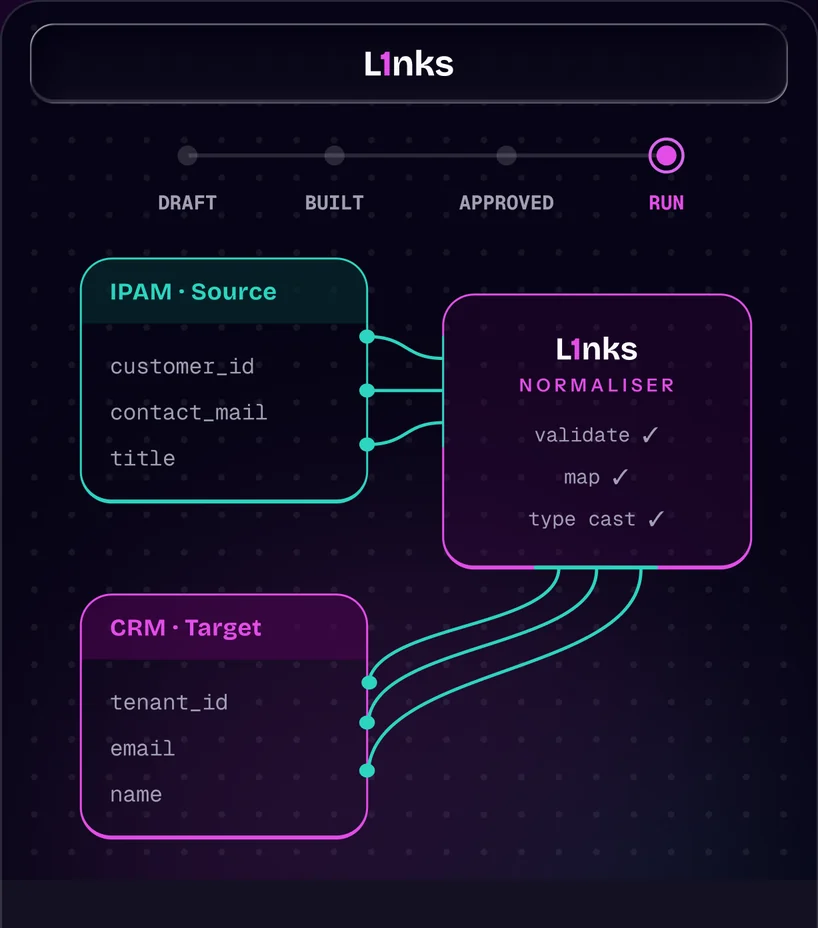
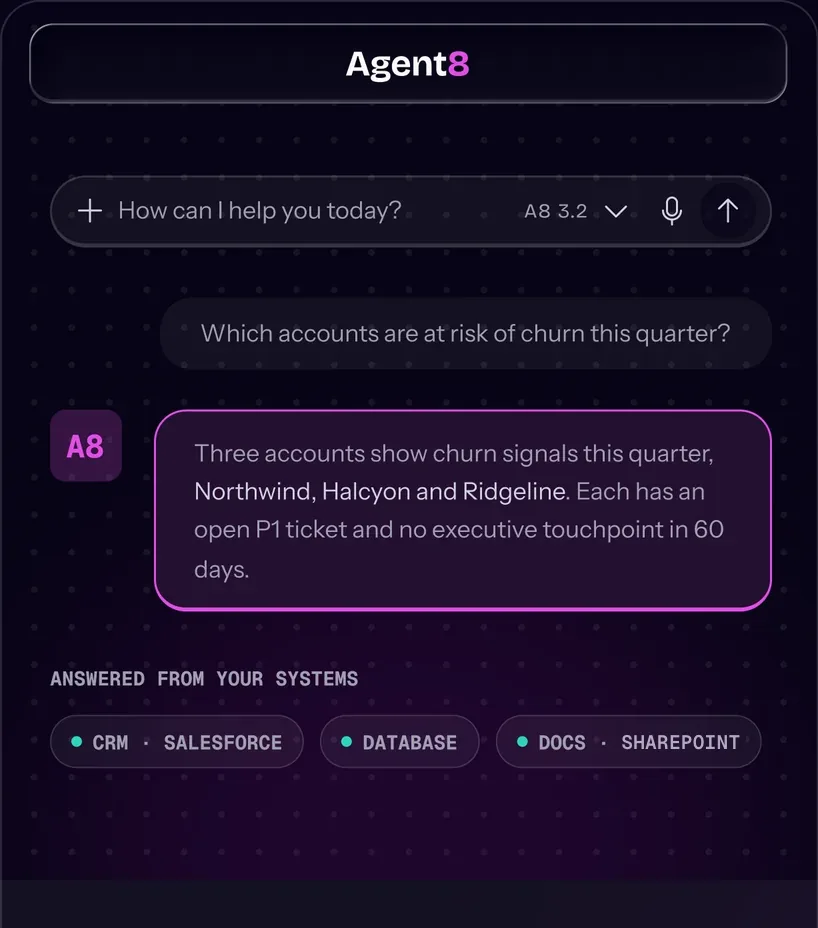
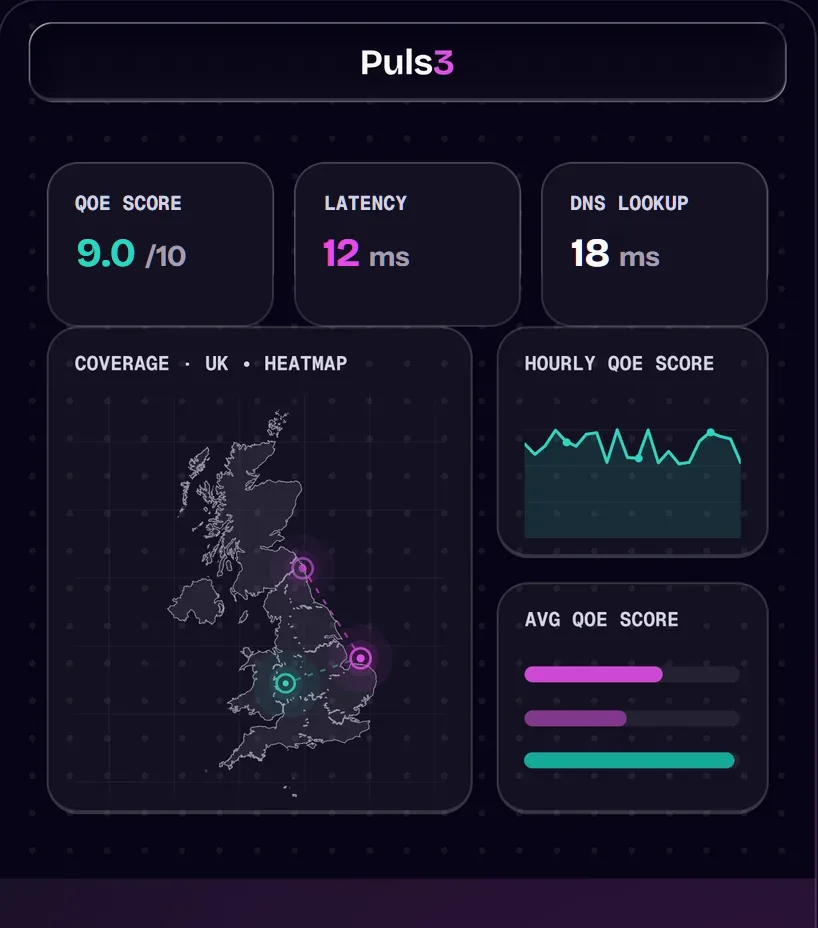
L1nks, Agent8 and Puls3 run in production for clients today.
-
If the build needs AI later, the supplier does not change
We add AI to the build we delivered, on the same data.
Platforms
In house solutions that can take work out of the build
Where one of our platforms already does part of the job, the build starts from it.
-
Learn more , Data fabric and data orchestration
Data fabric and data orchestration
Connects each of your systems once, catalogues what each one holds and validates data as it moves, so what arrives already agrees.
-
Learn more , Private AI for your business data
Private AI for your business data
For teams that want AI on their own knowledgebase without handing it to a public assistant. Private, per client RAG inside your own network.
-
Learn more , App and network experience
App and network experience
Bots test your network from the customer's end, on a schedule or on demand, so you can identify service issues before a customer complains.
Technology
The technology stack behind the solutions we develop
The tools we reach for most often. Our engineering is not limited to this list: a tailored solution sometimes calls for something else, and we choose by fit.
-
Languages
Python, TypeScript and JavaScript, C#, PHP, SQL.
-
Frameworks
.NET, Node.js, React, Django and FastAPI.
-
Cloud and infrastructure
Microsoft Azure, AWS, private cloud and on premises estates, Docker and Kubernetes.
-
Data
PostgreSQL, SQL Server, MongoDB, Redis, and L1nks for the integration layer.
-
AI and machine learning
PyTorch, TensorFlow, scikit-learn and large language models served privately, where AI creates measurable value.
-
Delivery
Git, CI pipelines with automated tests, and releases traceable to a person.
Security
The security and compliance standards behind every system we build
Risk is the reason most custom builds stall in review. These practices are part of how we build, whatever the sector.
- Your data stays in your estate, with the legal responsibility for it set out in the contract.
- Role based access control governing who can reach which data, granted by role and revoked when the role ends.
- Information security run to ISO 27001 practice.
Sectors
We develop tailored solutions for different industries
Every sector has its own records, systems and ways of working. We learn yours first, then build AI and software that fit the way your teams already operate.
Telecom and ISPs
App and network experience monitoring, and data integration across operator systems.
Learn more, Telecom and ISPsConstruction
Permit automation, faster responses to tenders, analytics and talk to your documents.
Learn more, ConstructionFinancial services
Liveness checks, KYC, identity verification and fraud prevention.
Learn more, Financial servicesOther services
AI, automation and infrastructure
Whether it is AI, custom software, CRM/ERP rollout or the cloud and infrastructure to run it, we scope it, build it and support it after going live.
-
Learn more , Custom AI development
Custom AI development
AI that understands your business, built on your own data and shaped around the way your teams work.
-
Learn more , AI integration and deployment
AI integration and deployment
AI and agents deployed into the systems you already run, and connected to your data.
-
Learn more , AI strategy and consulting
AI strategy and consulting
Readiness, roadmap, use case prioritisation and governance, from AI experts.
-
Learn more , Data orchestration
Data orchestration
Discovery, cleansing and pipelines: the data layer your systems and AI depend on.
-
Learn more , Data strategy consulting
Data strategy consulting
Deciding what data to keep, who owns it and what to fix first, then delivering it in that order.
-
Learn more , AI cloud and security
AI cloud and security
Private AI environments, on premises, in your cloud or air gapped, with your data kept in bounds.
-
Learn more , Odoo ERP and CRM
Odoo ERP and CRM
Odoo fitted to your process: apps, custom modules, integration and data migration.
Proof
Businesses that stopped doing it manually
Each card opens the full case study.
-


- Manufacturing
Donut Safety Systems
Delivered an LMS and a custom CRM to manage & track trainings, certifications, manufacturing process, marketing and sales.
Read moreElev8 has been a fantastic partner in supporting the creation, maintenance of our Learning Management System. What really sets them apart is how collaborative they are, they take the time to understand our business and tailor bespoke solutions rather than offering a one-size-fits-all approach. Their compliance guidance has also been invaluable, giving us confidence that our system and reporting meet the standards we require.
Working with Elev8 has made a real difference to how we manage systems across our business. We wouldn’t hesitate to recommend them to any organisation looking for a systems provider that genuinely acts as a partner rather than just a supplier. Thanks again for everything the team does for us, it’s a pleasure working with Elev8.
Insights from our team
Notes from the build side: scoping, integration and what happens after going live.
-
Data governance that survives an audit
What data is held, what for, and who governs it, written down in a form a regulator will accept.
-
AI strategy for regulated industries
Where AI is worth using in a regulated business, where it is not, and how to tell the difference before you spend.
-
Retention policies for training data
How long to keep the data a model was trained on, who decides, and how to delete it without losing the audit trail.



Common questions
Custom software development questions, answered plainly
Everything you need to know about working with Elev8.
How do we know whether to build custom or buy off the shelf?
Buy when a product meets the requirement as it is, because it costs less and goes live sooner. Build when the process is specific to your business, when data cannot leave your estate, or when the product would need heavy modification to fit. We tell you which during discovery, and explain the reasoning.
What drives the cost of a custom software project?
Three things: the number of systems the build has to connect to, the state of the data in them, and the number of roles and approval steps the process carries. The size of your company does not. Discovery turns those into a written scope, a cost estimate and a timeline.
How long before we have something the team can use?
It depends on the size of the work, so discovery gives you a timeline. We build in short cycles, on your data, so the people who will use it can try it as it takes shape, and it can run alongside the old route until it has proved itself.
What happens to the systems we already run?
They stay. The build sits alongside them, connects to them through our own integration platform, and takes over the manual steps between them. Replacing a system is a decision you make for its own reasons, not something a custom build forces.
Can you take over software another agency built?
Yes. We start with discovery of what exists: the code, the data it runs on and the systems around it. That produces a written scope for finishing or stabilising it, and we say plainly if any part is better rebuilt than rescued.
What if we do not know exactly what we want yet?
That is what discovery is for. We map how the process runs today, where it stalls and who is doing the re-keying, and write the scope from that rather than from a wish list. If the answer turns out to be a product you can buy, or a data problem to fix first, we say so.
Will you add AI to it later if we need it?
Yes, and the supplier does not change. A custom build already has the data layer and the integrations AI needs, so adding prediction or an agent later is an extension of what we have built, where AI creates measurable value.
What does support cover once the build is live?
We agree what support covers with you. It can include fixes, changes to keep up with the systems the build connects to, and further improvements as your process changes.
Tell us which process you want automated
Describe the work your team still does by hand. If it needs software rather than AI, that is the first thing we will say.