

Data strategy consulting that ends in systems you can trust
Data strategy consulting from a firm that delivers the plan it writes. We find where your data disagrees with itself, agree one definition of each core record, decide what to fix first, and cost the work, so the strategy does not stop at the document.
We work with clients and partners across the globe.



The cost
The cost of running a software system without a data strategy
Nobody budgets for these. They are paid anyway, every month, in time and in decisions made on figures nobody trusts.
-
Engineering time spent maintaining connections
Developers keep point to point integrations alive instead of building anything new.
-
The same record entered twice
Two systems each hold a version of it, and each is right about half of the fields.
-
Reports that need manual reconciliation
Nobody presents a figure until someone has spent a day making two systems agree.
-
Overlapping tools licensed by different departments
Three products that each hold a customer record, bought separately, none of them the master.
-
Integration costed system by system
Every new application adds a link to every existing one, so the price rises with each addition.
-
Automation and AI work that stalls at the data layer
The project reaches the point where it needs one clean record, and there is not one.
Deliverables
What you get from a data strategy engagement
Five things, each written down and signed off. Together they are the plan, and the plan is deliverable by us or by anyone you choose.
-
A map of where your data lives
Connect with a data strategy expertEvery system, what it holds, and where the same record appears twice.
-
Agreed definitions for core records
Connect with a data strategy expertOne definition of a customer, a site, an asset, signed off across teams.
-
A priority order
Connect with a data strategy expertWhat gets fixed first, what waits, and what can be left alone.
-
An ownership model
Connect with a data strategy expertWho is responsible for each dataset once the work is done, by name rather than by team.
-
A delivery plan
Connect with a data strategy expertThe build, sequenced and costed, with the team who will carry it out.
Why Elev8
Why consult with Elev8
Most data strategies fail in execution. Ours are written by the company that would deliver them, on a platform we own.
-
The plan is written by the company that will deliver it
A recommendation that has to survive delivery is made more carefully than one that ends at the slide.
-
The cost is real
The delivery plan is priced by the team that would deliver it, with infrastructure from our sister company DS Total Solutions.
-
Legacy platforms are in the map
They are where the important records usually sit, so the plan treats them as record holders, not a footnote.
-
The strategy can say leave it alone
Not every dataset is worth fixing. The priority order says which ones are, and which can wait.
Next steps
AI, automation and infrastructure
Whether it is AI, custom software, CRM/ERP rollout or the cloud and infrastructure to run it, we scope it, build it and support it after going live.
-
Learn more , Custom AI development
Custom AI development
AI that understands your business, built on your own data and shaped around the way your teams work.
-
Learn more , Custom and automated software development
Custom and automated software development
Business software, internal tools, workflow automation and legacy replacement.
-
Learn more , AI integration and deployment
AI integration and deployment
AI and agents deployed into the systems you already run, and connected to your data.
-
Learn more , AI strategy and consulting
AI strategy and consulting
Readiness, roadmap, use case prioritisation and governance, from AI experts.
-
Learn more , Data orchestration
Data orchestration
Discovery, cleansing and pipelines: the data layer your systems and AI depend on.
-
Learn more , AI cloud and security
AI cloud and security
Private AI environments, on premises, in your cloud or air gapped, with your data kept in bounds.
-
Learn more , Odoo ERP and CRM
Odoo ERP and CRM
Odoo fitted to your process: apps, custom modules, integration and data migration.
Platforms
Where our own platform fits
Elev8 built its own platforms to solve the problems a data plan keeps running into. Each one is named only when the plan calls for it.
-
Learn more , Data fabric and data orchestration
Data fabric and data orchestration
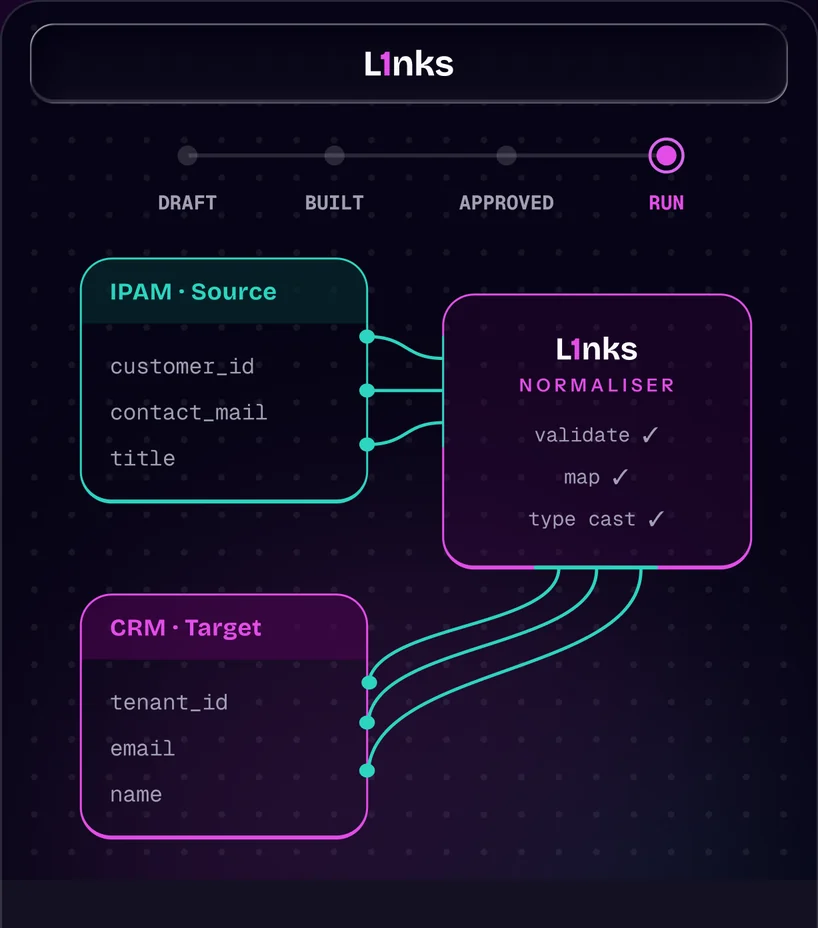
Connects each of your systems once, catalogues what each one holds and validates data as it moves, so what arrives already agrees.
-
Learn more , Private AI for your business data
Private AI for your business data
For teams that want AI on their own knowledgebase without handing it to a public assistant. Private, per client RAG inside your own network.
-
Learn more , App and network experience
App and network experience
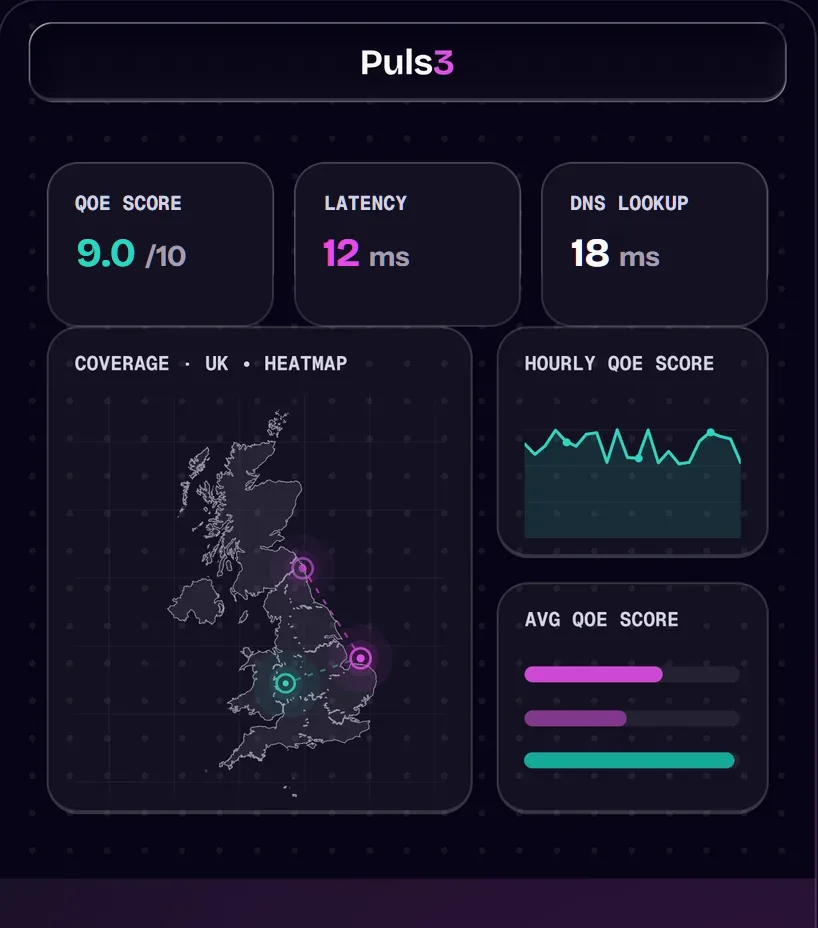
Bots test your network from the customer's end, on a schedule or on demand, so you can identify service issues before a customer complains.
Sectors
Industries we serve
Every sector has its own records, systems and ways of working. We learn yours first, then build AI and software that fit the way your teams already operate.
Telecom and ISPs
App and network experience monitoring, and data integration across operator systems.
Learn more, Telecom and ISPsConstruction
Permit automation, faster responses to tenders, analytics and talk to your documents.
Learn more, ConstructionFinancial services
Liveness checks, KYC, identity verification and fraud prevention.
Learn more, Financial servicesIn their words
Words from our clients
Don’t just take our word for it, hear it from our clients.
-


- Manufacturing
Donut Safety Systems
Delivered an LMS and a custom CRM to manage & track trainings, certifications, manufacturing process, marketing and sales.
Read moreElev8 has been a fantastic partner in supporting the creation, maintenance of our Learning Management System. What really sets them apart is how collaborative they are, they take the time to understand our business and tailor bespoke solutions rather than offering a one-size-fits-all approach. Their compliance guidance has also been invaluable, giving us confidence that our system and reporting meet the standards we require.
Working with Elev8 has made a real difference to how we manage systems across our business. We wouldn’t hesitate to recommend them to any organisation looking for a systems provider that genuinely acts as a partner rather than just a supplier. Thanks again for everything the team does for us, it’s a pleasure working with Elev8.
Insights from our team
Notes on ownership, definitions and what an audit actually asks.
-
Data governance that survives an audit
What data is held, what for, and who governs it, written down in a form a regulator will accept.
-
AI strategy for regulated industries
Where AI is worth using in a regulated business, where it is not, and how to tell the difference before you spend.
-
Retention policies for training data
How long to keep the data a model was trained on, who decides, and how to delete it without losing the audit trail.



Common questions
Data strategy questions, answered plainly
Everything you need to know about working with Elev8.
What will we get at the end of the engagement?
Five written deliverables: a map of where your data lives, agreed definitions for your core records, a priority order for what gets fixed, an ownership model naming who is responsible for each dataset, and a delivery plan that is sequenced and costed. Together they are a plan anyone can execute.
We already have a data strategy that never got implemented. Can you take it from there?
Yes. We start by checking it against what exists today, since systems and people have usually changed since it was written, then turn it into the five deliverables above with a cost and a team attached. The usual reason a strategy stalls is that nobody priced or sequenced it. We do both.
Will you recommend your own software?
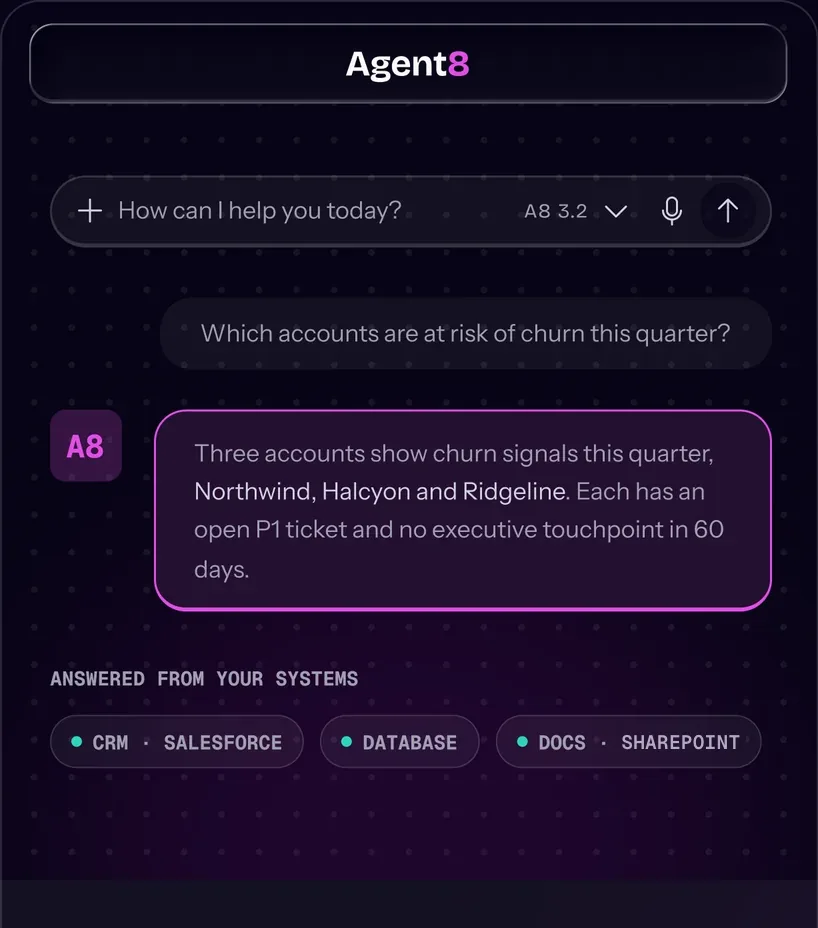
Only where the plan calls for it, and we say so plainly. L1nks is named when systems need to exchange clean data, Agent8 when the plan reaches document and knowledge work. Where a tool you already own does the job, the plan says to keep it. The delivery plan is written so anyone can carry it out.
How much of our team's time does it take, and who needs to be involved?
Mostly decisions rather than hours. The people who own each core record, usually one person from operations, one from finance and one from IT, agree definitions and sign off the ownership model. We do the mapping and the writing. Expect a few short sessions over the engagement, not a secondment.
How long will it take to have the whole strategy ready?
It depends on the number of systems and how many core records have to be defined, so the scope we agree at the start sets the timeline.
Will you be able to implement that strategy as well?
Yes. The plan names the team who would carry it out and the platform it would run on, and the delivery services that follow it, starting with data orchestration, are ours. You are not obliged to use us for delivery, but a plan written by the company that will deliver it is the reason it gets built.
Does this mean replacing systems we have already paid for?
No. The plan treats each system as the record holder for what it does well and connects it to the others. Where a tool is redundant because another already holds the same record, the priority order says so, but retiring it is a decision you make, not a condition of the work.
The first step towards a sound data plan
Tell us which figures nobody trusts and which records live in more than one place. That is usually where the map starts.